

How To Read An SEO Report
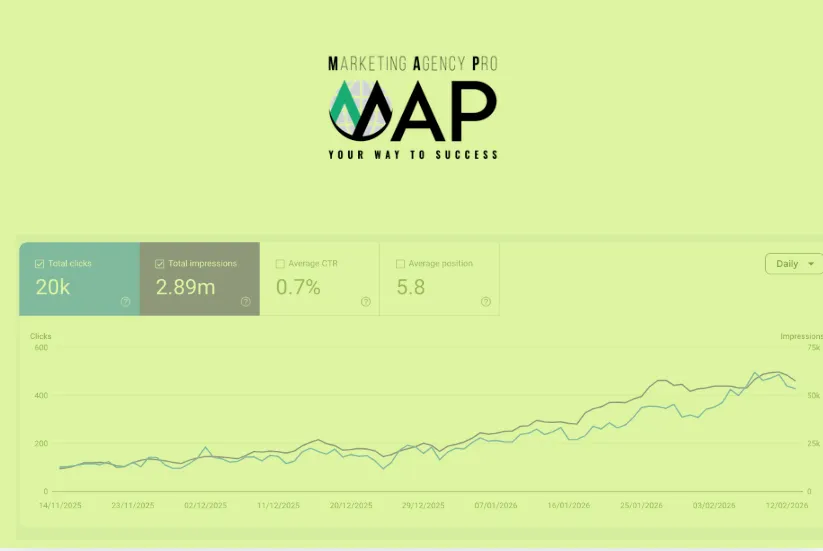
Most SEO reports are read in thirty seconds: a glance at the green arrows, then back to work. Learning how to read an SEO report properly takes about ten minutes, and it starts with a single question. Did search bring the business more enquiries this month than last?
Key Takeaways
- Read enquiries first, visits second, visibility third.
- Average position can fall in a good month.
- A percentage means nothing until you check the period it is compared with.
- Ranking counts need a date and a filter for real customer searches.
- Count visits from the country you serve.
Start With The Outcome
An SEO report exists to answer a commercial question. Rankings and traffic are the mechanism; enquiries are the product. At MAP we order every report the same way: what search delivered, what we did, and what comes next.
If your report has no enquiry figure, ask why. Sometimes the tracking was never set up. We have seen sites with no analytics installed at all, and no report can show enquiries until that is fixed. A gap named in the report is better than one hidden behind a chart.
Five Numbers Worth Reading
You can ignore most of the page. These five carry the story.
- Visits from search: the people who clicked through from Google.
- Times seen: how often your pages appeared in results, clicked or not.
- Average position: where you sat, weighted by how often you were seen.
- Page-one searches: how many customer searches you rank in the top ten for.
- AI answer appearances: how often Google’s AI answers drew on your pages.
Read them together. For mortgage brokers we cover the full path from search to signed client on our SEO for mortgage brokers page; a report is a monthly snapshot of that path.
When Averages Mislead You
Average position is the number owners misread most often. In November, one mortgage broker’s report showed average position slipping by nearly five places in 28 days. Visits were up 10% and times seen were up 29% in the same period.
We split the data search by search. More than four of those five places came from the site appearing far more often on searches where it already sat lower down. On searches present in both months, position moved by less than one place. The site had not dropped. It was being shown for more.
A second finance client had the same pattern: visits almost doubled while average position eased by 1.8 places. Read alone, that average looks like bad news. Read with visits and times seen, it is growth.
Check The Comparison Period
Every percentage compares two periods, and the second one matters as much as the first. A new specialist medical site we manage showed three-month growth in visits of more than 35,000%. The earlier period held twelve days of data, because the site was new.
We printed the figure with that caveat beside it. When a report shows a dramatic number, look for the dates. If there are none, ask for them.
Rankings Need A Date
Ranking tools do not check every keyword every day. In one November report, a tool listed a search in third place, while Google’s own data put the same search at an average position around 32. The tool checks each keyword on a different day, and some of its readings were more than two months old.
Counts need a second filter. One site had three searches on page one, and only one was a customer search. The other two were other people’s names. A report that says “three keywords on page one” and stops there is technically correct and commercially useless.
This is the difference between vanity metrics and customer pathways, and it sits at the centre of behaviour-based SEO.
Count The Right Country
Helpful articles attract readers from everywhere. On one Australian surgeon’s site, about a third of search visits over three months came from the United States, and about a quarter came from Australia. Global visits flatter the total. Only local ones can book.
Ask for visits and average position filtered to the country, state or city you serve. Reports that plateau on local numbers while global ones climb need a different conversation, which we cover in our guide to why SEO plateaus.
Questions To Ask Monthly
- How many enquiries came from search, and how do you know?
- Which period is each percentage compared with?
- When was each ranking last checked?
- How many page-one searches are real customer searches?
- What share of visits came from the area we serve?
- What did you do this month, and what is planned next?
A good agency answers all six without a follow-up email. How we dig into the data behind each answer is our own method, and it is the part that takes the experience.
Frequently Asked Questions
How often should I get an SEO report?
Monthly suits most service businesses. It is long enough for trends to show and short enough to change course.
What is a good average position?
There is no universal figure. A site that is growing into new searches often shows a worse average while visits rise. Judge position on the searches that bring customers.
Why did impressions rise while clicks stayed flat?
Usually because the new impressions sit on page two or lower, where few people click. It can also mean your pages are appearing inside AI answers.
Should an SEO report include enquiries?
Yes. If enquiries cannot be measured yet, the report should say so and name the fix.
Read It Like An Owner
You do not need to become an SEO specialist to read a report well. Start with enquiries, check the dates behind every percentage, and ask whether each ranking is a customer search. Ten minutes a month is enough to know whether the work is building a business or decorating a dashboard.

Cyril Sansano
Cyril Sansano is the founder of Marketing Agency Pro (MAP) and one of the leading SEO & AEO specialists for mortgage brokers. For over 15 years, Cyril has worked in digital marketing — starting with Facebook Ads, managing millions in paid campaigns, leading marketing teams, and working with top agencies across the US and Australia. But what truly set him apart wasn’t just technical skill. It was a mission.