

How Law Firms Win the “Near Me” Search: Local SEO That Brings In Real Matters
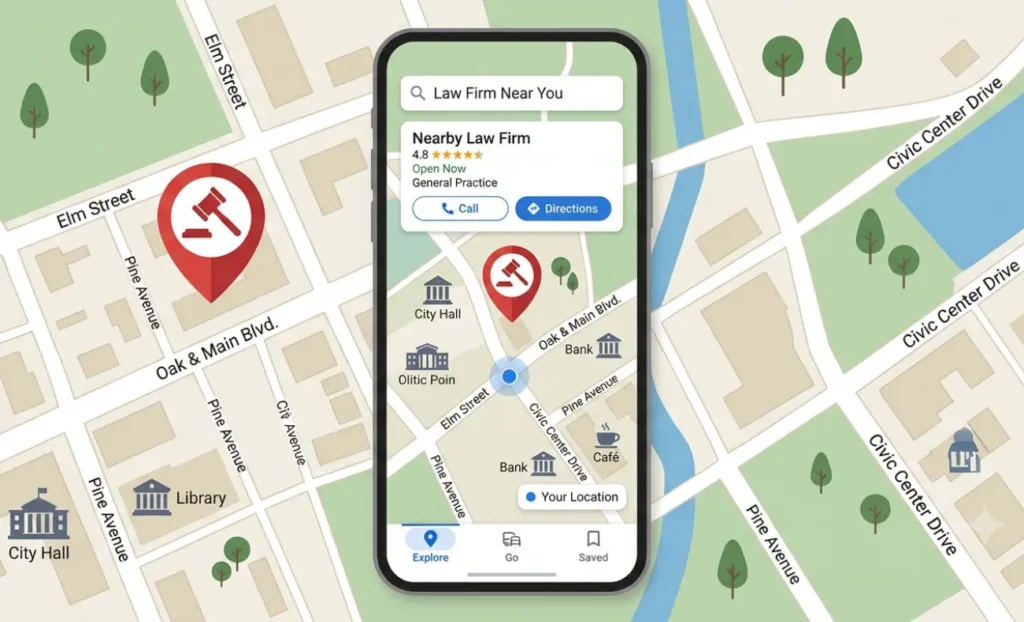
Most people looking for a lawyer start in the same place. They pick up their phone and search something like “family lawyer near me” or “conveyancer in Parramatta”. What happens in the next few seconds decides whether they call you or the firm three suburbs over.
For a law firm, local search is not a marketing nicety. It is the front counter. And most firms are losing matters there without ever knowing it, because they have never set the counter up properly.
Here is how local search actually works for law firms, and what to fix first.
Why local search matters more for lawyers than almost anyone
Legal work is local and high-stakes. Someone facing a property settlement, a separation, or an injury claim wants a real firm they can sit across from, not a national directory. They also tend to choose quickly, because the matter is stressful and they want it handled.
That means two things. The firms that show up first in local results get a large share of the enquiries. And the cost of being invisible is not a missed click, it is a signed client who walked into someone else’s office.
The good news is that local search is winnable. You are not competing with every firm in the country, only the ones in your area for your practice areas. Niche down to what you actually do and where you do it, and the field gets small enough to dominate.
What decides who shows up first
When someone searches for a lawyer near them, Google leans on three things: how relevant your firm is to what they typed, how close you are, and how prominent and trusted you look. You cannot move your office, but you can strongly influence the other two.
Relevance comes from your website clearly stating what you do and where. A firm that says “we practise law” gives Google nothing to match. A firm with a clear conveyancing page that names the suburbs it serves is easy to rank for conveyancing in those suburbs.
Prominence comes from signals of trust: a complete Google Business Profile, genuine reviews, consistent contact details across the web, and content that shows real expertise. These are the levers most firms leave untouched.
Your Google Business Profile is doing more than you think
The profile that appears on the right of a Google search, and in Google Maps, is often the first impression a client gets. For local search it carries real weight, and it is free.
Claim it, then fill it out properly. The correct firm name, address and phone number. Your practice areas listed as services. Real photos of the office and the team, not stock images. Your hours kept current. The questions section answered in your own words. A firm that treats the profile as a live asset, posting updates and responding to reviews, signals to Google that it is active and trusted.
One detail catches many firms out. Your name, address and phone number must match exactly everywhere they appear online, your website, the profile, legal directories, the law society listing. Inconsistent details quietly drag your ranking down.
Reviews are the currency of legal trust
Few decisions feel riskier to a client than choosing a lawyer, so they lean hard on what other people say. Reviews influence both whether a client picks you and how high Google ranks you.
Most firms underuse reviews badly, usually because no one is comfortable asking. The fix is a simple, consistent process: at the natural high point of a matter, when the settlement lands or the case resolves well, ask the client directly and make it easy with a link. A steady trickle of recent, specific reviews beats a handful from three years ago.
Mind your professional conduct rules when you do this. The law society in your state has guidance on advertising and testimonials, and your review approach needs to sit inside it. Honest and compliant always wins the longer game.
Practice-area and location pages, not one thin “Services” page
A single page that lists every area of law tells Google very little and a worried client even less. The firms that win local search build a real page for each practice area, and where they serve several areas, a page for each location too.
A dedicated wills and estates page that explains the process, answers the common questions, and names the area it serves will outrank a generic services page every time. It also reads better to the person deciding whether to call. The page that ranks and the page that converts are usually the same page, because both reward being genuinely clear and useful.
The second front door: AI search
There is a newer wrinkle worth naming. A growing share of people now ask an AI assistant rather than scroll a list of links. Someone might ask ChatGPT or Google’s AI “who are the good family lawyers in Newcastle” and read the answer it gives.
The firms that get named in those answers are, broadly, the ones that already do the local fundamentals well: clear practice-area content, strong reviews, consistent details, real authority. Search now has two front doors, the traditional results and the AI answer, and the same client walks through both. The work that wins one tends to win the other.
Where to start
If you do nothing else this month, do these. Claim and complete your Google Business Profile. Fix your name, address and phone number so they match everywhere. Build one proper page for your most valuable practice area. And put a simple, compliant process in place for asking happy clients to leave a review.
None of this is quick-hit marketing. It is a foundation that compounds, and once it is in place it keeps bringing in matters without you thinking about it.
If you want to see exactly where your firm stands in local and AI search right now, and where the gaps are, that is what our free 45-minute Search Visibility Audit shows you, live and on screen. No pitch until you ask.

Cyril Sansano
Cyril Sansano is the founder of Marketing Agency Pro (MAP) and one of the leading SEO & AEO specialists for mortgage brokers. For over 15 years, Cyril has worked in digital marketing — starting with Facebook Ads, managing millions in paid campaigns, leading marketing teams, and working with top agencies across the US and Australia. But what truly set him apart wasn’t just technical skill. It was a mission.